
Introduction to Shipping from China to Vietnam
Shipping from China to Vietnam is a vital link in Southeast Asia’s booming trade ecosystem, connecting China’s manufacturing prowess with Vietnam’s dynamic economy. As neighboring countries with deep economic ties, this route facilitates the flow of electronics, machinery, textiles, and more, supporting Vietnam’s role as a global supply chain hub. In 2025, bilateral trade exceeds $110 billion annually, driven by the ASEAN-China Free Trade Area and Vietnam’s export-oriented growth. Major Vietnamese ports like Ho Chi Minh, Haiphong, and Danang serve as efficient gateways, handling vast container volumes and connecting to inland markets.
This guide explores every aspect of shipping from China to Vietnam, including sea freight from Shanghai to Ho Chi Minh, air freight from Shenzhen to Haiphong, and DDP shipping from China to Vietnam for seamless door-to-door delivery. We provide detailed insights on costs, transit times, customs procedures, and potential challenges to empower importers with actionable knowledge. For real-time shipment updates, utilize our tracking service. With 15 years of expertise, Welltrans Logistics offers tailored solutions, ensuring reliability, cost efficiency, and smooth navigation of this critical trade route for businesses of all sizes.
Why Shipping from China to Vietnam?
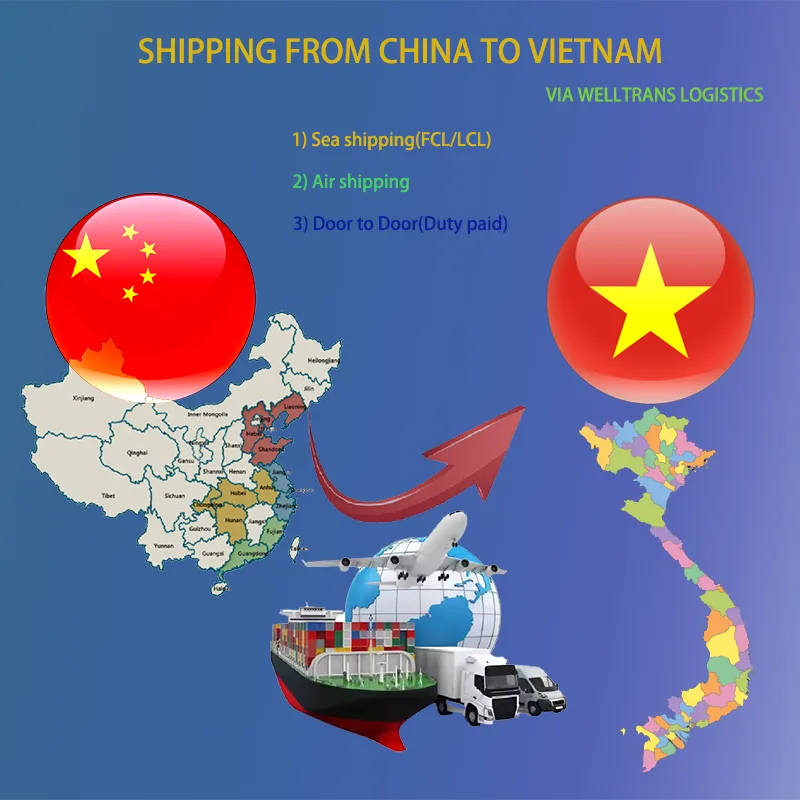
Shipping from China to Vietnam thrives on a robust bilateral trade relationship, with Vietnam importing over $110 billion worth of goods from China in 2023, a figure projected to grow in 2025 amid economic recovery and regional integration. As Vietnam’s largest trading partner, China supplies essential inputs—electronics, machinery, raw materials—fueling Vietnam’s manufacturing boom and its emergence as a global export hub. The ASEAN-China Free Trade Area enhances this partnership by reducing tariffs and fostering supply chain synergy, making shipping from China to Vietnam a strategic choice for businesses.
Chinese products stand out for their quality, affordability, and innovation, giving Vietnamese companies a competitive edge. For example, integrated circuits and telephones from China power Vietnam’s tech sector, while textiles and plastics support its apparel and packaging industries. China’s mature supply chain, with industrial clusters in the Pearl River Delta and Yangtze River region, ensures rapid production, scalability, and customization. Ports like Shenzhen, Shanghai, and Guangzhou provide world-class infrastructure, enabling efficient sea freight from China to Vietnam and air freight from China to Vietnam with direct, reliable routes.
Transportation convenience is a major advantage, with short distances—such as Shenzhen to Ho Chi Minh—allowing quick transits and minimizing costs. Additional options like rail and road via border crossings offer flexibility for inland areas. E-commerce platforms like Alibaba simplify sourcing from Chinese suppliers, while DDP shipping from China to Vietnam streamlines logistics for small and medium enterprises. This route not only reduces expenses but also enhances supply chain resilience, driving Vietnam’s GDP growth and creating mutually beneficial opportunities for exporters and importers.
Shipping Methods from China to Vietnam
Shipping from China to Vietnam offers a range of transportation options designed to meet diverse cargo needs and timelines. The primary methods include sea freight, air freight, and DDP shipping, each providing flexibility for full container loads (FCL), less than container loads (LCL), and door-to-door services.
Sea Freight from China to Vietnam
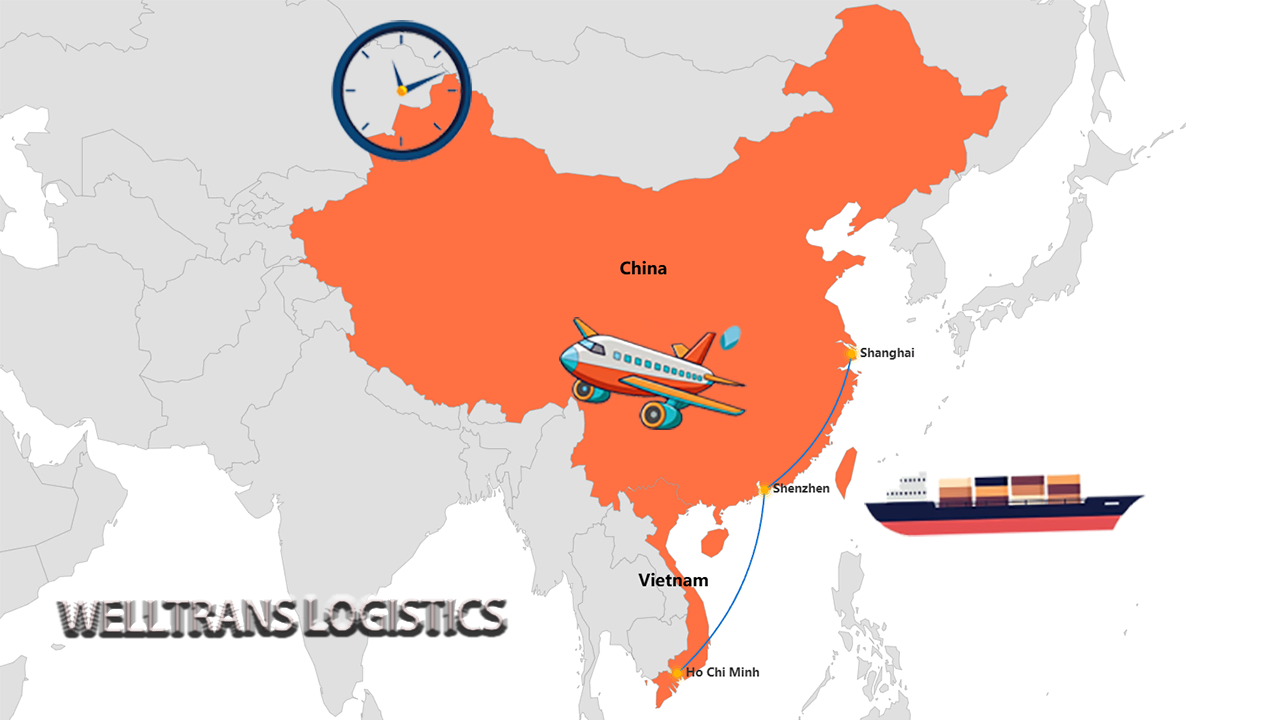
Sea freight is a cost-effective solution for bulk shipments, utilizing FCL for dedicated containers or LCL for shared space, ideal for goods like machinery or textiles. This method supports major routes such as sea freight from Shanghai to Ho Chi Minh and sea freight from Guangzhou to Danang, handling high volumes with efficiency and reliability.
Air Freight from China to Vietnam
Air freight from Shenzhen to Haiphong or Shanghai to Hanoi is tailored for urgent or high-value items, such as electronics or perishables, offering rapid delivery despite higher costs. It’s perfect for businesses needing quick market entry in Vietnam’s competitive landscape.
DDP Shipping from China to Vietnam
Delivered Duty Paid (DDP) shipping from China to Vietnam provides a comprehensive solution, covering all costs including duties, taxes, and door-to-door delivery. This can integrate sea, air, or rail, with sea DDP suited for large quantities and air DDP ideal for time-sensitive shipments, ensuring a hassle-free experience for importers.
How Much Does Shipping Cost from China to Vietnam?
Update: March 2026
Shipping costs from China to Vietnam vary depending on the transportation mode, cargo volume, and market conditions. The following are reference prices for September 2025; for precise quotes tailored to your needs, please contact us to avoid pricing risks. Welltrans Logistics offers competitive rates, reduced by $100 per FCL container, $10 per CBM for LCL, $0.2 per kg for air freight, and $10 per CBM for DDP compared to industry averages, ensuring you get the best value.
Sea Freight Costs from China to Vietnam
Sea freight is an economical choice for large shipments, with rates for key routes from major Chinese ports to Vietnamese destinations:
| Route | 20ft Container (FCL, USD) | 40ft Container (FCL, USD) | LCL (USD/CBM) |
|---|---|---|---|
| Sea Freight from Shanghai to Ho Chi Minh | 700 | 1200 | 90 |
| Sea Freight from Shenzhen to Haiphong | 750 | 1250 | 95 |
| Sea Freight from Guangzhou to Danang | 800 | 1300 | 100 |
| Sea Freight from Ningbo to Cai Mep | 750 | 1250 | 95 |
| Sea Freight from Qingdao to Cat Lai | 850 | 1400 | 105 |
Air Freight Costs from China to Vietnam
Air freight prioritizes speed, with a minimum chargeable weight of 45kg, suitable for smaller, urgent shipments:
| Route | Rate (USD/KG for 100kg+) | Rate (USD/KG for 1000kg+) |
|---|---|---|
| Air Freight from Shenzhen to Ho Chi Minh | 3.3 | 3.0 |
| Air Freight from Shanghai to Haiphong | 4.0 | 3.5 |
| Air Freight from Guangzhou to Hanoi | 4.5 | 4.0 |
For detailed calculations, check our guide on How to Calculate Air Freight Chargeable Weight.
DDP Shipping Costs from China to Vietnam
DDP shipping from China to Vietnam, including door-to-door from China to Vietnam services, covers all costs such as duties and taxes, offering a streamlined experience:
| Mode | Rate (USD/CBM for Sea DDP) | Rate (USD/KG for Air DDP) |
|---|---|---|
| Sea DDP to Ho Chi Minh | 80-180 | N/A |
| Air DDP to Haiphong | N/A | 3.3-8.8 |
Factors Affecting Shipping Prices
Several factors influence shipping costs from China to Vietnam, including fluctuating fuel surcharges that can rise with global oil prices, seasonal demand spikes (e.g., pre-holiday rushes) increasing rates by 15-30%, the distance and complexity of the route (e.g., northern ports to Hanoi vs. southern to Ho Chi Minh), and geopolitical events or trade policies that may impose additional fees. These variables require careful planning to manage expenses effectively.
Tips to Reduce Shipping Costs
- Increase Volume: Opt for shipments over 100kg for air freight or 1CBM for sea freight to lower per-unit costs.
- Schedule Strategically: Book during off-peak seasons to avoid surcharges and secure better rates.
- Optimize Packaging: Reduce dimensions and weight to minimize chargeable costs and improve handling efficiency.
By leveraging these strategies, businesses can significantly optimize their budget for shipping from China to Vietnam, ensuring cost-effective logistics solutions.
How Long Does It Take to Ship from China to Vietnam?
update: March 2026
Transit times for shipping from China to Vietnam depend on the chosen mode, specific route, and external factors such as port congestion or customs processing. Below, we break down the estimated durations for each transportation method to help you plan effectively.
Sea Freight Transit Times
Sea freight from China to Vietnam typically takes 8-20 days, with southern routes being faster due to proximity. The time includes loading, transit, and customs clearance:
| Origin Port | Destination Port | Transit Time (Days) |
|---|---|---|
| Shanghai | Ho Chi Minh | 8-14 |
| Shenzhen | Haiphong | 10-15 |
| Guangzhou | Danang | 9-16 |
| Ningbo | Cai Mep | 10-18 |
| Qingdao | Cat Lai | 13-20 |
Northern routes like Qingdao to Cat Lai may face slight delays due to longer sea distances, while southern routes benefit from direct shipping lines.
Air Freight Transit Times
Air freight offers the fastest option, ranging from 2-7 days, ideal for time-sensitive goods. Airport-to-airport times are:
| Origin Airport | Destination Airport | Transit Time (Days) |
|---|---|---|
| Shenzhen | Ho Chi Minh (SGN) | 2-5 |
| Shanghai | Haiphong (HPH) | 3-7 |
| Guangzhou | Hanoi (HAN) | 5-7 |
Shorter routes like Shenzhen to Ho Chi Minh benefit from frequent flights, while northern routes may involve additional connections.
DDP Shipping Transit Times
DDP shipping from China to Vietnam includes clearance and last-mile delivery, adding 2-5 days to base times:
| Mode | Transit Time (Days) |
|---|---|
| Sea DDP | 10-25 |
| Air DDP | 5-8 |
| Rail DDP | 8-15 |
Track progress with our tracking service. Plan buffers for peak seasons or weather disruptions to ensure timely delivery.
Customs Clearance Requirements for Vietnam
Customs clearance is a critical step in shipping from China to Vietnam, ensuring compliance with Vietnam’s import regulations under the ASEAN-China Free Trade Area. Proper preparation minimizes delays and avoids penalties, making it essential for smooth logistics.
- Commercial Invoice: Must detail the value, description, and HS codes of goods in English for accurate assessment.
- Packing List: Includes quantity, weight, and packaging details to facilitate inspection.
- Bill of Lading/Air Waybill: Serves as proof of shipment and is required for release at the destination port or airport.
- Certificate of Origin: Verifies Chinese origin, enabling preferential tariff rates under the FTA.
- BIETC Certificate: Confirms product compliance with international standards, often required for electronics or machinery.
- Import License: Necessary for restricted items such as certain chemicals or high-value electronics, obtainable from Vietnamese authorities.
For major exports like electronics, ensure CE or quality certificates are included, as Vietnam enforces strict technical standards. Textiles require proper labeling and origin verification to avoid delays. Machinery imports should comply with safety regulations, avoiding prohibited materials. Engaging a licensed customs broker and using Vietnam’s digital customs system (e-Vietnam) can streamline the process. In summary, thorough documentation and attention to product-specific requirements are key to navigating customs successfully, ensuring your goods reach their destination without hitches.
Import Tariffs from China to Vietnam
Import tariffs for shipping from China to Vietnam are generally low due to the ASEAN-China Free Trade Area, ranging from 0% to 10% for most goods based on HS codes, with an additional Value Added Tax (VAT) of 10% applied to the CIF value plus duties. Opting for DDP shipping from China allows the seller to handle these duties, simplifying the process for importers.
| Product | Duty (%) | VAT (%) |
|---|---|---|
| Integrated Circuits (Electronics) | 0 | 10 |
| Telephones (Electronics) | 0 | 10 |
| Boilers (Machinery) | 0-5 | 10 |
| Engines (Machinery) | 0-5 | 10 |
| Plastics (Materials) | 3-7 | 10 |
| Iron/Steel (Metals) | 0-10 | 10 |
| Vehicle Parts | 5-10 | 10 |
| Textiles (Fabrics) | 10 | 10 |
| Apparel | 10-20 | 10 |
| Chemicals | 0-5 | 10 |
Accurate HS code declarations and timely submissions are crucial to avoid penalties and ensure smooth customs clearance.
Major Sea Ports and Airports For Shipping From China to Vietnam
The robust port and airport infrastructure of China and Vietnam plays a pivotal role in facilitating efficient shipping from China to Vietnam. China’s extensive network of coastal, Yangtze, and Pearl River Delta ports drives the export of goods, while Vietnam’s strategic ports handle the influx, supporting a trade volume exceeding $144 billion in 2025.
Chinese Sea Ports
| Port | City | Main Goods | Role in Vietnam Trade |
|---|---|---|---|
| Shanghai | Shanghai | Electronics, machinery | World’s busiest port, leading exporter to Haiphong with 30% volume growth |
| Shenzhen | Shenzhen | Tech products, textiles | Key hub for southern routes to Ho Chi Minh, handles 25% of tech exports |
| Guangzhou | Guangzhou | Toys, plastics, apparel | Pearl River Delta leader, direct calls to Danang up 22% in 2025 |
| Ningbo-Zhoushan | Ningbo | Chemicals, vehicles | Efficient for bulk shipments to Cai Mep, growing 15% annually |
| Qingdao | Qingdao | Steel, apparel | Northern gateway, supports diverse exports to Cat Lai |
| Tianjin | Tianjin | Machinery, fabrics | Handles northern trade, expanding routes to Hanoi |
Yangtze ports like Shanghai dominate electronics and machinery exports, while Pearl River Delta ports such as Shenzhen and Guangzhou focus on tech and consumer goods. In Vietnam, key ports include Ho Chi Minh (southern hub, managing 60% of container traffic), Haiphong (northern gateway), Danang (central logistics base), Cai Mep (deep-water port), Cat Lai (inland connectivity), New Port (modern facilities), Vict (container focus), Phuoc Long (regional), and Qui Nhon (niche cargo). Major airports like Shanghai Pudong (PVG), Shenzhen Baoan (SZX), and Guangzhou Baiyun (CAN) in China, paired with Ho Chi Minh City (SGN), Hanoi (HAN), and Danang (DAD) in Vietnam, enhance air freight from China to Vietnam. This infrastructure supports seamless logistics, driving trade growth and market access.
Step-by-Step Guide to the Shipping Process from China to Vietnam
The shipping process from China to Vietnam requires meticulous planning to ensure efficiency and compliance with international standards. Here’s a step-by-step guide to navigate this route successfully.
- Contact a Freight Forwarder: Begin by engaging a China-based forwarder with expertise in export logistics to Vietnam, ensuring familiarity with local regulations.
- Request a Quote and Book: Provide detailed cargo information—volume, type, and destination—to receive an accurate pricing estimate and secure a booking.
- Coordinate with Supplier: Arrange pickup, proper packaging, and preparation of necessary documentation with your Chinese supplier.
- Purchase Insurance: Secure cargo insurance to protect against loss, damage, or delays during transit.
- Transport to Port or Airport: Move goods to the departure point, such as Shanghai port or Shenzhen airport, for loading.
- Export Customs Clearance: Submit required documents for Chinese customs approval, ensuring compliance with export laws.
- International Transit: Ship via sea, air, or rail to Vietnam, selecting the mode that best fits your timeline and budget.
- Import Customs Clearance: Handle duties, taxes, and documentation in Vietnam, leveraging a broker for efficiency.
- Final Delivery: Complete door-to-door delivery if using DDP, or arrange local transport to the destination.
Track your shipment with our tracking service. This structured process minimizes risks, ensures regulatory adherence, and optimizes delivery timelines, making shipping from China to Vietnam a seamless experience for importers and exporters alike.
Common Challenges When Shipping to Vietnam
Shipping from China to Vietnam presents several challenges that can impact delivery timelines and costs, requiring proactive strategies to mitigate risks.
- Delays: Port congestion, adverse weather, or border checks can extend transit times; plan buffers and monitor via our tracking service.
- Customs Issues: Incomplete documentation or mismatched HS codes can halt clearance; ensure accuracy and use experienced brokers.
- Peak Season Issues: High demand during festivals like Tet increases rates and delays; book early to secure capacity and avoid surcharges.
In summary, anticipating these challenges and implementing robust planning can safeguard your supply chain, ensuring reliable shipping from China to Vietnam despite seasonal or logistical hurdles.
How to Choose a Shipping Agent from China to Vietnam
Selecting the right shipping agent is a critical decision for successful shipping from China to Vietnam, directly impacting the safety, legality, and efficiency of your cargo delivery.
- Experience: Opt for agents with over 10 years of experience on the China-Vietnam route, ensuring deep knowledge of ports like Ho Chi Minh and Haiphong.
- Reliability: Choose agents with a proven track record, free of losses or customer complaints, to guarantee cargo security.
- Service Range: Ensure the agent offers comprehensive services, including sea freight, air freight, and DDP shipping from China to Vietnam, providing flexibility.
- Pricing: Avoid the lowest bids, as unreasonably low prices often hide risks; seek reasonable rates that reflect quality service.
- Customer Support: Prioritize agents with 24/7 support for real-time updates, issue resolution, and personalized assistance.
China-based forwarders are preferable due to their proximity to export hubs, enabling better coordination and cost control. Low prices may signal hidden fees or poor service, potentially leading to delays or damaged goods. Professional agents enhance your market competitiveness by ensuring timely deliveries and compliance. For trusted options, refer to our Top 10 Freight Forwarders in China for 2025. In conclusion, choosing a skilled, reliable agent with fair pricing is key to winning market share and building a robust supply chain for shipping from China to Vietnam.
Best Incoterms for Shipping from China to Vietnam
Incoterms define responsibilities and costs in shipping from China to Vietnam, playing a crucial role in trade agreements. For deeper insights, explore our guide at CIF vs EXW vs FOB.
EXW vs FOB
EXW (Ex Works): The buyer handles all responsibilities from the seller’s premises, ideal for experienced importers with control over logistics but requiring more effort. FOB (Free on Board): The seller manages costs and risks until goods are loaded onto the vessel, shifting responsibility to the buyer at the port, offering a balanced approach for sea freight from China to Vietnam.
CIF vs DDP
CIF (Cost, Insurance, Freight): The seller covers costs to the destination port, such as Ho Chi Minh, including insurance, suitable for buyers handling local clearance. DDP (Delivered Duty Paid): The seller bears all costs, including duties and delivery to the buyer’s door, perfect for simplifying logistics in door-to-door from China to Vietnam, especially for new importers.
Choosing the Right Incoterm
The best Incoterm depends on your business needs. EXW suits those with established networks, while FOB balances control and cost. CIF works for port-specific imports, and DDP is ideal for hassle-free, full-service shipping. Assess your capacity, market strategy, and relationship with suppliers to select the optimal term, enhancing efficiency in shipping from China to Vietnam.
Top 10 Commodities Imported from China to Vietnam
Vietnam’s import market from China, valued at over $110 billion annually in 2023, is driven by a diverse range of high-demand commodities that fuel its industrial and consumer sectors.
| Commodity | Subcategories | Value (USD Billion, 2023) |
|---|---|---|
| Electrical Machinery | Integrated circuits, telephones | 12.3 |
| Machinery | Boilers, engines, pumps | 10.5 |
| Plastics | Polymers, packaging materials | 8.2 |
| Iron and Steel | Bars, sheets, structures | 7.1 |
| Vehicles | Parts, motorcycles, autos | 6.4 |
| Chemicals | Organic compounds, fertilizers | 5.8 |
| Textiles | Fabrics, yarns, threads | 4.9 |
| Apparel | Clothing, accessories | 4.2 |
| Optical Instruments | Lenses, medical devices | 3.7 |
| Footwear | Shoes, components | 3.1 |
These commodities underpin Vietnam’s $144 billion trade with China, supporting industries from manufacturing to retail. Bulk shipping of these goods via sea freight from China to Vietnam optimizes costs, while strategic sourcing ensures competitiveness.
Why Choose Welltrans Logistics?
Welltrans Logistics stands out as your trusted partner for shipping from China to Vietnam, delivering unparalleled expertise and reliability to meet your logistics needs.
- Professionalism: With 15 years of experience in air and sea freight, we navigate complex routes like Shanghai to Ho Chi Minh with precision, leveraging deep industry knowledge to ensure compliance and efficiency.
- Reliability: Operating for over 13 years without a single loss or customer complaint, we guarantee the safety and timely delivery of your cargo, building trust with every shipment.
- Diversity of Channels: We offer a full spectrum of services, including sea freight, air freight, and DDP shipping from China to Vietnam, including door-to-door options, tailored to your specific requirements.
- Reasonable Pricing: Our rates never exceed 5% above cost, providing competitive pricing without compromising on quality, ensuring you maximize value in every transaction.
Track your shipments with our tracking service. Choose Welltrans Logistics for a seamless, cost-effective, and professional logistics experience that drives your business success in shipping from China to Vietnam.
FAQ for Shipping from China to Vietnam
What are the common shipping methods from China to Vietnam?
Common methods include sea freight (FCL/LCL), air freight, and DDP shipping from China to Vietnam, each suited to different cargo sizes and urgency levels.
How long does it take to ship from China to Vietnam?
Sea freight takes 8-20 days, air freight 2-7 days, and DDP 5-25 days depending on the mode.
What documents are required for shipping?
Required documents include a commercial invoice, packing list, bill of lading, certificate of origin, BIETC certificate, and import license if applicable.
How can I reduce shipping costs?
Increase shipment size (over 100kg for air, 1CBM for sea), book off-peak, and optimize packaging to lower costs.
What are the customs procedures?
Submit accurate HS codes and documents via Vietnam’s e-Vietnam system, using a broker for efficiency.
How do I track my shipment?
Use our tracking service with your shipment number for real-time updates.
Are there shipping restrictions?
Yes, restricted items include hazardous goods and certain chemicals; check Vietnam’s import list.
What is DDP shipping?
DDP (Delivered Duty Paid) means the seller covers all costs, including duties, to your door.
Can I use large platforms for procurement?
Yes, platforms like Alibaba are ideal; opt for larger orders (over 45kg air, 1CBM sea) to reduce unit costs.