
Introduction to Shipping from China to Singapore
Shipping from China to Singapore stands as a cornerstone of Southeast Asian trade in 2025, connecting China’s vast production capabilities with Singapore’s strategic hub status. With bilateral trade surpassing $100 billion annually, efficient logistics are essential for moving goods like electronics and machinery. This guide covers key elements of shipping from China to Singapore, including methods, costs, timelines, customs, and tips, helping businesses navigate routes to ports like PSA Singapore or Changi Airport for optimal results.
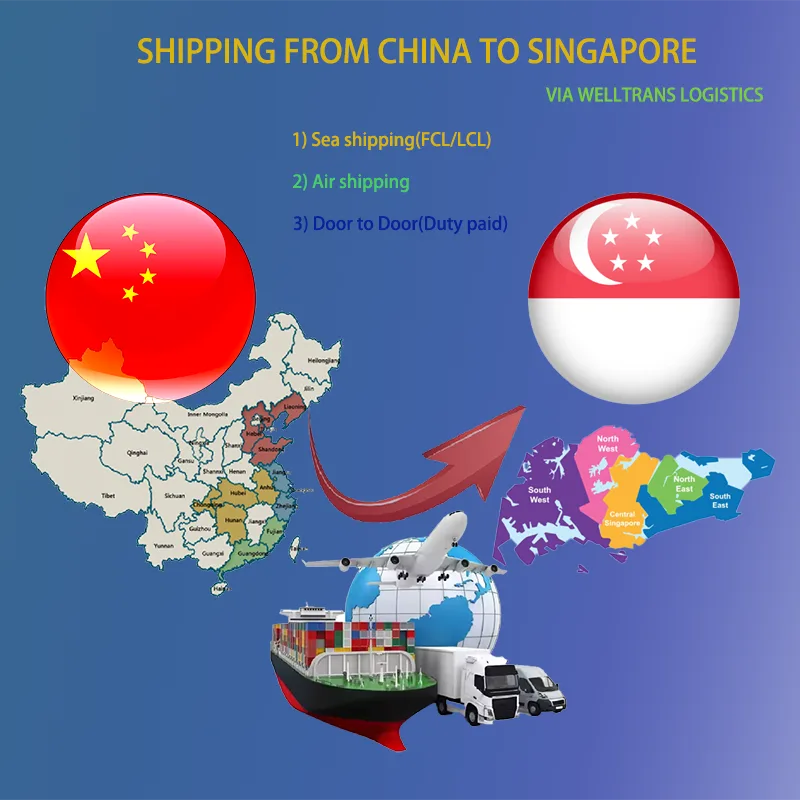
Why Shipping from China to Singapore?
Shipping from China to Singapore thrives on strong trade ties, with China as Singapore’s largest import partner, contributing over 14% of its $457 billion in imports. This relationship, bolstered by the China-Singapore Free Trade Agreement, facilitates tariff-free access for many goods.
Chinese products excel in innovation, quality, and cost-effectiveness, supported by a mature supply chain in regions like the Yangtze Delta. Transportation convenience shines through short routes, such as sea freight from Shanghai to PSA Singapore, enhancing speed and affordability for Singaporean importers.
Shipping Methods from China to Singapore
For shipping from China to Singapore, options include sea freight for bulk, air freight for urgency, rail for land connections, and DDP for comprehensive service. Sea offers FCL for full loads and LCL for shared, while air includes tax-inclusive door delivery. Select based on needs for efficient transit.
How Much Does Shipping Cost from China to Singapore?
Update: March 2026
Determining the cost of shipping from China to Singapore in 2025 involves considering factors like shipment size, method, and route specifics. At Welltrans Logistics, we offer competitive pricing, typically $100 less per container for FCL, $10 less per CBM for LCL, $0.2 less per KG for air freight, and $10 less per CBM for DDP compared to market averages. The following are reference prices based on current trends for popular routes such as sea freight from Shanghai to PSA Singapore or air freight from Shenzhen to Changi Airport. Note that these are estimates; for accurate quotes, please contact us with your shipment details.
Full Container Load (FCL) Shipping Costs
Full Container Load (FCL) is cost-effective for large volumes, providing dedicated space in 20ft or 40ft containers. Ideal for bulk goods like machinery, FCL rates for sea freight from China to Singapore vary by origin port. The table below shows adjusted estimates for 2025, incorporating our cost savings.
| Origin Port (China) | Destination (Singapore) | 20ft Container (USD) | 40ft Container (USD) |
|---|---|---|---|
| Shanghai | PSA Singapore | 650 | 1150 |
| Shenzhen | Pasir Panjang | 550 | 950 |
| Ningbo-Zhoushan | PSA Singapore | 750 | 1250 |
| Hong Kong | Keppel Terminal | 550 | 1150 |
| Guangzhou | Pasir Panjang | 750 | 1250 |
| Qingdao | PSA Singapore | 650 | 1450 |
| Tianjin | Keppel Terminal | 750 | 1550 |
| Dalian | PSA Singapore | 850 | 1650 |
| Xiamen | Pasir Panjang | 550 | 950 |
| Yingkou | Keppel Terminal | 750 | 1250 |
Less than Container Load (LCL) Shipping Costs
Less than Container Load (LCL) suits smaller shipments sharing space, making it economical for volumes under 15 CBM. LCL rates for sea freight from China to Singapore are charged per cubic meter, with our pricing $10 lower per CBM. The table highlights costs for key routes.
| Origin Port (China) | Destination (Singapore) | Cost per CBM (USD) |
|---|---|---|
| Ningbo | PSA Singapore | 55 |
| Shenzhen | Pasir Panjang | 35 |
| Shanghai | Keppel Terminal | 45 |
Air Freight Shipping Costs
Air freight from China to Singapore is ideal for urgent or high-value items, with costs based on weight tiers. Rates decrease for larger loads, and our pricing is $0.2 lower per KG. To minimize expenses, refer to our guide on how to calculate air freight chargeable weight. The table provides estimates for routes to Changi Airport (SIN).
| Origin City (China) | Weight Range | Destination Airport | Price per KG (USD) |
|---|---|---|---|
| Shanghai | 100-299 KG | SIN (Singapore) | 3.6 |
| Shanghai | 300-1000 KG | SIN | 3.3 |
| Shanghai | 1000+ KG | SIN | 3.0 |
| Shenzhen | 100-299 KG | SIN | 3.3 |
| Shenzhen | 300-499 KG | SIN | 3.0 |
| Shenzhen | 500-1000+ KG | SIN | 2.6 |
DDP (Delivered Duty Paid) Shipping Costs
DDP shipping from China to Singapore provides a comprehensive door-to-door service, including duties and clearance, at rates $10 lower per CBM than averages. Perfect for hassle-free imports, the table shows estimated costs for 2025.
| Origin (China) | Destination (Singapore) | Cost per CBM (USD) |
|---|---|---|
| Various Ports | Door-to-Door | 75 |
Factors Affecting Shipping Price
Prices fluctuate due to fuel surcharges, seasonal demand (e.g., higher during trade peaks), cargo type (hazardous adds fees), and route distances like from Dalian to PSA Singapore. Currency rates and global events also influence costs for shipping from China to Singapore.
Tips to Reduce Shipping Costs
To cut expenses in shipping from China to Singapore, increase shipment sizes—aim for air freight over 100kg or sea over 1CBM to lower per-unit rates. Schedule during off-peak times to avoid surcharges, and consolidate multiple orders to maximize container efficiency and reduce overall fees.
How Long Does It Take to Ship from China to Singapore?
update: March 2026
Transit times for shipping from China to Singapore vary; see reference table.
| Origin | Destination | Method | Days |
|---|---|---|---|
| Shanghai | PSA Singapore | Sea | 6-10 |
| Shenzhen | Pasir Panjang | Sea | 5-8 |
| Guangzhou | Changi | Air | 2-5 |
| Various | Door | DDP | 15-25 |
Sea: 6-20 days detailed by route. Air: 2-5 days. DDP: 15-25 days end-to-end.

Customs Clearance Requirements for Singapore
Customs clearance for shipping from China to Singapore ensures smooth delivery to ports like PSA Singapore or Changi Airport. Proper documentation and compliance with Singapore Customs regulations are key to avoiding delays. Below are essential requirements and steps for efficient clearance in 2025.
Required Documents
- Commercial Invoice: Lists goods, quantity, and value for GST.
- Packing List: Details packaging, weight, and dimensions.
- Bill of Lading/Air Waybill: Confirms transport and consignee.
- Certificate of Origin: Qualifies for CSFTA tariff exemptions.
- Import Permit: Obtained via TradeNet for all imports.
Key Clearance Steps
- Register UEN & Customs Account: Required for import declarations.
- Check Restrictions: Confirm if goods like electronics (IMDA) or food (AVA) need permits.
- Set Up Inter-Bank GIRO: For direct GST/duty payments.
- Furnish Security: For specific imports like temporary goods.
- Obtain TradeNet Permit: Submit declarations for clearance in 1-2 days.
Product-Specific Notes
Electronics need IMDA approval, food requires AVA permits, and chemicals need MSDS. Use DDP shipping from China for hassle-free clearance.
Tips for Success
Verify documents early, use our tracking and trace system, and partner with Welltrans Logistics to streamline shipping from China to Singapore. Bulk sourcing minimizes GST (9%) impact.
Import Tariffs from China to Singapore
Singapore is mostly duty-free; GST 9%. DDP saves via DDP shipping from China.
| Product | Rate (%) |
|---|---|
| Electronics | 0 |
| Machinery | 0 |
| Textiles | 0 |
| Plastics | 0 |
| Steel | 0 |
| Chemicals | 0 |
| Furniture | 0 |
| Footwear | 0 |
| Toys | 0 |
| Vehicles Parts | 0 |
Major Sea Ports and Airports For Shipping From China to Singapore
Efficient shipping from China to Singapore relies on selecting the right ports and airports to optimize costs, transit times, and logistics. China’s robust network of coastal, Yangtze, and Pearl River ports, alongside major cargo airports, facilitates seamless trade with Singapore’s world-class hubs like PSA Singapore and Changi Airport. Below, we detail key Chinese and Singaporean ports and airports, their cargo profiles, and their roles in this vital trade route for 2025.
Major Chinese Sea Ports for Shipping to Singapore
China’s ports handle massive volumes, with seven of the world’s top ten container ports located here. These ports serve as critical gateways for sea freight from China to Singapore, supporting goods like electronics, machinery, and textiles.
| Port | City | Container Volume (2023, Million TEU) | Main Cargo | Role in Singapore Trade |
|---|---|---|---|---|
| Shanghai Port | Shanghai | 49.3 | Electronics, Machinery, Textiles | World’s busiest port, key for direct routes to PSA Singapore |
| Shenzhen Port | Shenzhen | 29.0 | Consumer Goods, Electronics | Major hub for high-tech exports to Pasir Panjang |
| Ningbo-Zhoushan Port | Ningbo/Zhoushan | 31.0 | Iron Ore, Crude Oil, Containers | Deep-water hub for bulk and container shipping to Singapore |
| Guangzhou Port | Guangzhou | 21.9 | Agricultural Products, Building Materials | Pearl River Delta hub for southern China exports |
| Qingdao Port | Qingdao | 22.0 | Iron Ore, Coal, Containers | Northern gateway for trans-Pacific routes via Singapore |
| Tianjin Port | Tianjin | 20.0 | Electronics, Automobiles | Key for northern China exports to Keppel Terminal |
| Dalian Port | Dalian | 5.0 | Oil, Coal, Automobiles | Northeast hub for bulk cargo to Singapore |
| Xiamen Port | Xiamen | 12.0 | Containers, Electronics | Southeast hub for efficient routes to PSA Singapore |
| Nanjing Port | Nanjing | 3.5 | Chemicals, Machinery | Yangtze River port for inland exports |
| Huangpu Port | Guangzhou | 5.0 | General Cargo, Containers | Pearl River support for southern trade |
Major Singapore Sea Ports for Receiving Shipments
Singapore’s ports are among the most advanced globally, with PSA Singapore leading as a transshipment hub. These ports handle sea freight from China to Singapore efficiently, ensuring quick turnaround for routes like Shanghai to PSA Singapore.
| Port | City | Main Cargo | Role in Trade |
|---|---|---|---|
| PSA Singapore | Singapore | Containers, Electronics | World’s leading transshipment hub, handling 37M TEU annually |
| Jurong Port | Singapore | Bulk, General Cargo | Multi-purpose port for diverse shipments |
| Keppel Terminal | Singapore | Containers, Machinery | Key for transshipment and regional distribution |
| Pasir Panjang Terminal | Singapore | Containers, High-Value Goods | Mega-port for large container vessels |
Major Airports for Air Freight from China to Singapore
Air freight from China to Singapore is ideal for time-sensitive goods like electronics or perishables. China’s top cargo airports connect seamlessly with Singapore’s Changi Airport, a regional leader in air logistics. The table below highlights key airports for air freight from China to Singapore.
| Airport | City | Cargo Volume (2020, Million MT) | Main Cargo | Role in Singapore Trade |
|---|---|---|---|---|
| Shanghai Pudong (PVG) | Shanghai | 3.62 | Electronics, High-Value Goods | Primary hub for air freight to Changi (SIN) |
| Beijing Capital (PEK) | Beijing | 1.95 | Machinery, Consumer Goods | Northern hub for direct flights to Singapore |
| Guangzhou Baiyun (CAN) | Guangzhou | 1.76 | Textiles, Electronics | Southern hub for frequent Changi routes |
| Shenzhen Bao’an (SZX) | Shenzhen | 1.39 | Electronics, Consumer Goods | High-tech export hub to Changi |
| Hong Kong (HKG) | Hong Kong | 4.80 | Electronics, Precious Metals | Major cargo hub with daily flights to Singapore |
| Xiamen Gaoqi (XMN) | Xiamen | 0.40 | Electronics, General Cargo | Southeast hub for air freight to Changi |
Singapore’s Primary Airport for Receiving Shipments
Changi Airport (SIN), Singapore’s premier air cargo hub, handles over 2 million metric tons annually, specializing in electronics, pharmaceuticals, and perishables. Its world-class facilities ensure rapid customs clearance and connectivity for air freight from China to Singapore, making it the top choice for routes like Shenzhen to Changi.
Optimizing Port and Airport Selection
Choosing the right port or airport depends on cargo type, urgency, and proximity to suppliers. For instance, sea freight from Shenzhen to Pasir Panjang suits electronics, while air freight from Shanghai Pudong to Changi is ideal for urgent shipments. Use our tracking and trace system to monitor shipments and ensure timely delivery to Singapore’s hubs. Welltrans Logistics optimizes routes for cost and speed, leveraging ports like Shanghai and airports like PVG for seamless shipping from China to Singapore.

Step-by-Step Guide to the Shipping Process from China to Singapore
The process of shipping from China to Singapore involves coordinated steps to ensure efficient delivery to hubs like PSA Singapore or Changi Airport. This streamlined guide outlines the key stages for 2025, helping businesses navigate logistics for routes like sea freight from Shanghai to PSA Singapore or air freight from Shenzhen to Changi.
Shipping Process Steps
- Booking and Quotation: Select a shipping method (sea, air, rail, or DDP) based on cargo size and urgency. Provide shipment details (weight, volume, destination like Pasir Panjang) to a forwarder like Welltrans Logistics for a tailored quote.
- Cargo Preparation and Documentation: Pack goods securely and prepare documents: commercial invoice, packing list, bill of lading/air waybill, and certificate of origin for CSFTA benefits. Ensure compliance for items like electronics (IMDA) or food (AVA).
- Export Customs Clearance in China: Submit documents for export clearance, including licenses for restricted goods. Welltrans Logistics coordinates inspections at ports like Shenzhen or airports like Shanghai Pudong to comply with Chinese regulations.
- International Transportation: Goods ship via chosen method—sea (5-10 days to PSA Singapore), air (2-5 days to Changi), or rail (20-30 days). Track progress with our tracking and trace system for real-time updates.
- Import Customs Clearance in Singapore: Submit documents via TradeNet, pay 9% GST, and meet product-specific rules (e.g., IMDA for electronics). Welltrans ensures swift clearance at ports like Keppel Terminal.
- Final Delivery: Arrange transport to destinations like Jurong or door-to-door via DDP, as detailed in our DDP shipping from China guide, ensuring timely arrival.
Common Challenges When Shipping to Singapore
Shipping from China to Singapore is a vital trade route, but challenges like delays, customs hurdles, and peak season issues can disrupt logistics. Understanding these obstacles helps businesses plan effectively for routes like sea freight from Shanghai to PSA Singapore or air freight from Shenzhen to Changi Airport. Below, we outline key challenges and solutions for smooth shipping in 2025.
Key Challenges and Solutions
- Delays Due to Port Congestion: Ports like PSA Singapore and Pasir Panjang face congestion during peak trade periods, delaying shipments by 2-5 days. Solution: Schedule shipments during off-peak times and use our tracking and trace system to monitor progress.
- Customs Clearance Complications: Incomplete documents or non-compliance with regulations (e.g., IMDA for electronics, AVA for food) can lead to holds and fees. Solution: Prepare accurate documents (invoice, packing list, certificate of origin) and use Welltrans Logistics for expert clearance.
- Peak Season Surcharges: High demand during events like Chinese New Year increases rates by 10-20% for routes like Ningbo to Keppel Terminal. Solution: Plan shipments early and opt for larger volumes to secure better rates.
- Regulatory Compliance Issues: Goods like chemicals require MSDS or special permits, risking delays if mishandled. Solution: Verify requirements in advance and consider DDP shipping from China for streamlined compliance.
- Weather-Related Disruptions: Storms in the South China Sea can affect sea freight schedules to Jurong Port. Solution: Include cargo insurance and flexible timelines to mitigate risks.
Partnering with a reliable forwarder like Welltrans Logistics, featured in our top 10 freight forwarders in China for 2025, ensures proactive solutions for shipping from China to Singapore, minimizing disruptions and costs.
How to Choose a Shipping Agent from China to Singapore
Selecting a reliable shipping agent for shipping from China to Singapore can significantly impact your business operations, from cost management to timely deliveries. A good agent acts as a bridge, handling logistics complexities like customs clearance at PSA Singapore or Changi Airport. When evaluating options, consider multiple dimensions such as experience, service scope, pricing transparency, and customer support. Opting for a Chinese forwarder often provides advantages in local sourcing, regulatory knowledge, and competitive rates due to their proximity to manufacturing hubs like Shenzhen or Shanghai.
Key Dimensions to Evaluate
- Experience and Expertise: Look for agents with proven track records in China-Singapore routes, familiar with regulations like CSFTA tariffs and Singapore Customs requirements. Chinese forwarders excel here, offering insights into export processes from ports like Ningbo.
- Service Scope and Flexibility: Ensure they provide comprehensive services, including FCL/LCL sea freight, air freight, and DDP options for door-to-door delivery. This versatility helps adapt to varying cargo needs, such as urgent electronics shipments to Changi.
- Pricing and Transparency: Choose agents with reasonable, transparent pricing—avoid the lowest bids, as they often signal risks like hidden fees, delays, or poor handling. Professional agents balance cost with quality, ensuring value without compromising reliability.
- Customer Support and Technology: Prioritize agents offering real-time tracking and responsive support. Good service fosters trust, enabling quick issue resolution and better market responsiveness.
- Reputation and Reviews: Review client feedback and certifications. Chinese forwarders with strong reputations minimize risks, helping businesses secure market advantages through consistent performance.
Why focus on Chinese forwarders? Their deep integration with China’s supply chain allows for faster coordination and lower costs compared to international alternatives. However, steer clear of overly cheap options, as they may lead to subpar service, cargo damage, or compliance issues—ultimately costing more in lost opportunities. Investing in a professional, reasonably priced agent ensures superior experiences, from seamless customs to on-time arrivals, positioning your business to capture and retain market share effectively. For recommendations, explore our top 10 freight forwarders in China for 2025 to find trusted partners like Welltrans Logistics.
Best Incoterms for Shipping from China to Singapore
Choosing the right Incoterms for shipping from China to Singapore defines responsibilities between buyers and sellers, affecting risk, costs, and control. Popular options like CIF, EXW, and FOB suit Singapore’s efficient ports and free trade environment, but selection depends on your experience level and shipment type. For a deeper comparison, refer to our detailed analysis in CIF vs EXW vs FOB, which breaks down these terms for practical application.
Understanding CIF for Singapore Shipments
CIF (Cost, Insurance, and Freight) places the seller responsible for costs up to the destination port, including insurance. This is beneficial for Singapore buyers new to imports, as it reduces involvement until goods arrive at PSA Singapore, minimizing risks during transit from Shanghai.
EXW: When Buyer Control is Key
EXW (Ex Works) shifts all responsibilities to the buyer from the seller’s premises in China. Ideal for experienced importers with strong logistics networks, it offers flexibility but requires handling export clearance and transport to Changi Airport, potentially increasing oversight for air freight shipments.
FOB as a Balanced Option
FOB (Free On Board) has the seller manage until goods are loaded onto the vessel in China, after which the buyer takes over. This balance suits many Singapore trades, providing cost control while sharing risks, especially for sea freight to Pasir Panjang Terminal.
Comparing Incoterms for Optimal Choice
When comparing, CIF suits risk-averse buyers, EXW favors those with in-house expertise, and FOB offers a middle ground. For Singapore’s duty-free imports (with 9% GST), DDP can extend seller duties further. Assess based on cargo value, urgency, and partnership strength to enhance efficiency.
Top 10 Commodities Imported from China to Singapore
| Commodity | Sub-Categories | Value (B USD) |
|---|---|---|
| Electrical Machinery | Phones, Circuits | 14 |
| Mineral Fuels | Oil, Petroleum | 10 |
| Computers/Electronics | Laptops, Chips | 8 |
| Industrial Machinery | Parts, Equipment | 7 |
| Precious Metals | Gold, Jewelry | 5 |
| Optical Equipment | Medical Devices | 4 |
| Plastics | Articles, Polymers | 3 |
| Organic Chemicals | Compounds | 3 |
| Vehicles Parts | Auto Components | 2 |
| Iron Steel | Bars, Sheets | 2 |
Why Choose Welltrans Logistics?
Welltrans Logistics is your trusted partner for shipping from China to Singapore, offering unmatched expertise, reliability, and value. We ensure seamless deliveries to hubs like PSA Singapore or Changi Airport with competitive pricing and diverse options. Here’s why we stand out in 2025:
- 15 Years of Expertise: With 15 years in air and sea freight, we master routes like Shenzhen to Pasir Panjang, ensuring compliance and efficiency.
- Proven Reliability: Over 13 years, zero losses or complaints, with secure handling and tracking for peace of mind.
- Diverse Channels: Air, sea (FCL/LCL), and DDP door-to-door services, as in our DDP guide, suit all cargo needs.
- Fair Pricing: Rates never exceed costs by 5%, offering affordability for routes like Shanghai to PSA Singapore, per our top 10 forwarders.
FAQ for Shipping from China to Singapore
Common questions about shipping from China to Singapore to guide your logistics planning. For cost efficiency, source from large platforms and ship larger volumes.
- What is the cost of sea freight from China to Singapore?FCL: $400-$1550/container, LCL: $20-$70/CBM. Bulk shipments over 1CBM from major platforms reduce unit costs.
- How long does air freight take from China to Singapore?2-5 days to Changi Airport. Shipments over 45kg lower costs; use large platforms for savings.
- What documents are needed for Singapore customs?Invoice, packing list, bill of lading, certificate of origin. Large platforms ensure compliance with IMDA or AVA requirements.
- Is DDP shipping suitable for Singapore?Yes, at ~$75/CBM, covering duties and delivery. Bulk over 1CBM or 45kg is cost-efficient.
- What causes delays in shipping to Singapore?Port congestion at PSA Singapore, customs issues, or peak seasons. Bulk shipments via reliable platforms minimize delays.
- Can I ship small quantities to Singapore?Yes, but air under 45kg or sea under 1CBM is costly. Source from large platforms and increase volume for better rates.
- How do tariffs affect shipping costs to Singapore?Mostly duty-free, with 9% GST. DDP, as in our DDP guide, includes taxes; bulk sourcing helps.
- What’s the best method for urgent shipments to Singapore?Air freight (2-5 days). Over 45kg via large platforms ensures cost-effective delivery.